A Tiranga Game gift codelooks like free money and almost never is. Gift codes carry wagering conditions that lock your whole balance, invite codes quietly enrol you under someone who earns from your losses, and the majority of "free code today" pages exist to collect your details or push an APK. This guide explains what each code type actually does, what the conditions cost in real terms, and how to tell a genuine promotion from a harvesting operation.
Tiranga Game Gift Code: How They Work and What They Cost
The Three Code Types
These get used interchangeably in conversation and they are not the same thing at all:
| Type | What it gives you | Who benefits | When you can enter it |
|---|---|---|---|
| Gift code | One-off bonus credit | You, subject to conditions | Usually any time, in a redeem box |
| Invite / referral code | Small joining bonus, sometimes none | Mainly the referrer, ongoing | Registration only — rarely afterwards |
| Promo code | A deposit-linked offer | You, subject to conditions | At the point of deposit |
The middle row is the one people misunderstand. An invite code is not a favour someone is doing for you. It permanently links your account to theirs, and on most platforms they earn a commission based on your activity — frequently including a share of your losses, across multiple levels of the referral tree.
That is not automatically sinister; referral marketing is normal. But you should know which side of the transaction you are on before you type the code.

Where Official Tiranga Game Gift Codes Are Posted
A genuine code has one source: the operator that will honour it. In practice that means it appears somewhere inside the platform you already use, not on a third-party page. The usual places to look are:
- The announcement or notice banner that appears when you open the app or sign in.
- The promotions, rewards or activity section, which also carries the terms for each offer.
- The in-app message inbox, where account-specific codes are often delivered.
- An operator announcement channel, but only if you reached it through a link inside the app itself — lookalike channels copy names and logos closely.
To verify a code someone has sent you, open the platform through your own bookmark and check whether the same code, with the same terms, appears in one of those places. If it does not, treat it as unverified. This site does not publish codes and never will: we have no way to confirm that a code is live, what it is worth or who it was meant for, and a list of "today's codes" that cannot be verified is exactly what harvesting sites use as bait. Our article on colour prediction Telegram channels shows how code drops are used to pull people into paid signal groups.
How a Tiranga Game Gift Code Works
A gift code is entered in a redeem box and credits an amount set by the operator. Check the value on the confirmation screen and in the promotion terms rather than trusting a figure quoted elsewhere — and note that the credit usually arrives as bonus balance rather than withdrawable balance.
That distinction is the whole story. Bonus balance typically:
- Cannot be withdrawn directly.
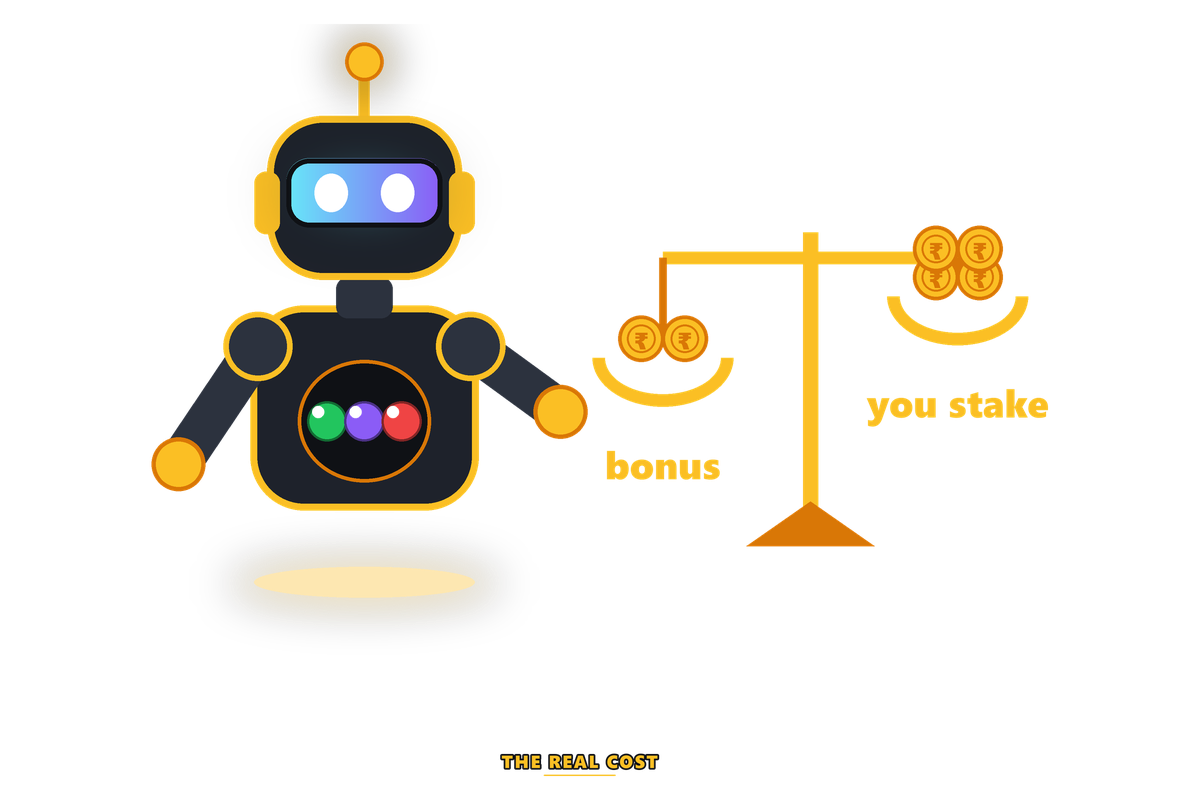
- Carries a wagering requirement — a multiple you must stake before anything is releasable.
- Frequently locks your entire balance, including money you deposited yourself, until that requirement is met.
- Often expires quickly — the deadline is in the promotion terms or shown as a countdown in the app.
- May be excluded from certain games or capped in how much it can win.
So a gift code is not cash for the amount printed on it. It is restricted credit of that amount, in exchange for accepting a condition on everything else you hold.
How Invite Codes Work
Invite codes power the growth of essentially every platform in this category. The structure is usually multi-level: you invite someone, they invite someone else, and commission flows upward through several tiers.
What is being shared upward is normally a percentage of turnover or of net losses. Read that carefully — in a multi-level structure where earnings depend on recruitment and on the losses of people below you, the activity has drifted a long way from gaming.
Two practical consequences:
- You usually cannot add or change an invite code after registration. If you care who gets the commission, decide before you sign up.
- When someone pushes their code enthusiastically, they have a direct financial interest in you playing and losing. That is worth remembering when they also recommend a "strategy".
What a Code Really Costs
Here is the arithmetic that gift code pages never show. The values below are illustrative units, not real offers — the actual value and wagering multiple of any code are in its promotion terms inside the app. Assume a house edge of roughly 5% on the amount staked:
| Code value | Wagering multiple | Must stake | Expected loss clearing it |
|---|---|---|---|
| 10 units | 20× | 200 units | ~10 units |
| 10 units | 25× | 250 units | ~12.5 units |
| 10 units | 30× | 300 units | ~15 units |
| 10 units | 40× | 400 units | ~20 units |
From 20× upwards, the expected cost of clearing matches or exceeds the code's value. To check a real code, multiply its value by the wagering multiple in its terms, then take about a twentieth of that as the expected cost. That is not an accident or a badly designed promotion — it is the design. A bonus is a mechanism for increasing turnover, and turnover is where the operator's margin is earned.
The reasonable conclusion: a gift code is worth redeeming only if you were going to stake that volume anyway, at those stakes, on that platform. For most players that is not true, which makes declining the better move. The same logic applies to deposit bonuses, covered in the payments guide.
Why "Free Gift Code Today" Sites Exist
Search for gift codes and you will find hundreds of pages promising fresh working codes daily. Almost none of them have codes. What they do have is a business model:
- Referral capture.The "code" is actually an invite code, so redeeming it enrols you under the site owner.
- APK distribution. The code is gated behind a download, which is how modified apps get installed. See the app guide.
- Data collection.A form asking for your number, user ID or account details "to apply the code". That is a phishing form.
- Ad revenue. Endless clicks through expired codes, with the promise of a working one always one page further on.
- Telegram funnelling. The code requires joining a channel, which then sells prediction signals.
A genuine code is short, published by the operator itself, and requires nothing except typing it into the redeem box. If getting it involves a download, a form, a channel join or your account credentials, it is not a code.
Genuine Promotion or Harvesting Operation?
| Signal | Genuine promotion | Harvesting operation |
|---|---|---|
| Source | The operator's own app or site | A third-party blog or Telegram channel |
| What it asks for | The code, typed into a redeem box | Your number, user ID, or an app install |
| Terms | Wagering stated openly | "No conditions!" — always false |
| Amount | Stated in the operator's own promotion terms | Implausibly large, with no terms attached |
| Urgency | Normal expiry | "Only 5 left, claim now" |
| Where it sends you | Nowhere — you are already there | A download, a form or a channel |
How to Redeem a Tiranga Game Gift Code Safely
If you do have a code from a legitimate source, the process should be entirely self-contained inside the platform:
- Sign in through your own bookmark, never through a link that came with the code.
- Find the redeem or promo box — usually under Promotions, Rewards or Account.
- Enter the code exactly, including case. Most are case-sensitive.
- Read the terms shown before confirming — the wagering multiple, the expiry, and whether it locks your existing balance.
- Check where the credit lands: bonus balance or withdrawable balance. It is almost always the former.
- Screenshot the confirmation, in case the credit does not appear.
If a code fails, the usual reasons are mundane: it has expired, it was single-use and someone else redeemed it first, it is restricted to new accounts, or it is region-locked. A failed code is not worth pursuing across three websites — the ecosystem around expired codes is exactly where the harvesting operations live.
| Message | Usual meaning | Worth retrying? |
|---|---|---|
| Code expired | Past its validity window | No |
| Code already used | Single-use, redeemed by someone else | No |
| Invalid code | Typo, or it was never real | Check the characters once, then stop |
| Not eligible | New accounts only, or region restricted | No |
| Code applied, balance unchanged | Credited as bonus, not withdrawable balance | Check the bonus balance separately |
The Economics of Referral Codes
It is worth understanding the money flow, because it explains a great deal about the content you encounter around these games.
In a typical multi-level referral structure, a referrer earns a percentage of the turnover or net losses of everyone below them, across several tiers. Someone with a large downline can earn substantially more from commission than they ever could from playing — which means their incentive is to maximise the number of people playing and the amount those people stake.
That incentive explains a great deal:
- Why so much "strategy" content encourages larger stakes and recovery betting.
- Why prediction channels and referral codes so often appear together — the signals draw people in, the code monetises them.
- Why the people most enthusiastic about a platform are frequently the ones earning from it rather than winning at it.
- Why "proof of winnings" screenshots circulate so widely and proof of losses never does.
None of this makes every referrer dishonest. But when someone offers you a code alongside advice about how to play, you should treat the advice as marketing, because financially that is what it is.
No Code Is Worth Your Account Details
Never give your user ID, password, OTP or payment details to any site or person offering a gift code. A real code is redeemed by you, inside your own account, and requires nothing else. Anyone asking for credentials in exchange for a bonus is attempting to take the account, not to give you anything.
If play stops feeling like fun, take a break. Our page on limits and support covers spending limits, self-exclusion steps and support helplines available in India. You must be 18 or older, and online real-money gaming is restricted or banned in several Indian states — check your local rules first.
Other Promotion Types and What They Cost
Gift codes are only one item on the promotions page. The others follow the same pattern — real value attached to conditions that usually exceed it — and are worth recognising.
| Promotion | What it offers | The condition to check |
|---|---|---|
| Daily check-in | Small credit for opening the app each day | Designed to build a daily habit — that is the actual cost |
| First deposit bonus | Matched percentage on your deposit | Wagering multiple, usually applied to your whole balance |
| Rebate or cashback | A percentage of losses returned | Paid as bonus credit with its own wagering requirement |
| VIP or level rewards | Perks that rise with turnover | Rewards volume — the exact behaviour that costs you most |
| Invite bonus | Credit for each person you recruit | You now earn from their losses; consider how that sits |
| Attendance streak | Escalating reward for consecutive days | Breaking the streak resets it, which discourages taking breaks |
Look down the right-hand column and a theme emerges. Almost every promotion in this category is engineered to increase either how often you play or how much you stake, and both of those raise the total the house edge is applied to. That is not a criticism of any particular operator — it is simply what promotions in a fixed-margin game are for.
The daily check-in and attendance streak deserve particular attention because they look harmless. Their function is to make opening the app a daily routine, and a daily routine is precisely the pattern the responsible gaming guide flags as a risk factor. A small credit is a low price for the operator to pay for that.

There is one more thing worth checking before you redeem anything: whether the bonus can be declined or forfeited later. Some platforms let you surrender a bonus and release your own deposit; others lock the balance until the wagering is complete with no way back. That single detail decides whether accepting a code is a reversible decision or a commitment, and it is usually buried in the promotions terms rather than shown at the point of redemption. If you cannot find it, assume the answer is no.
So Is Any Code Ever Worth Using?
Yes, in a narrow set of circumstances — and it is worth stating them precisely rather than dismissing the whole category.
A code is worth redeeming when all of these are true:
- It came directly from the operator, not from a third-party site or channel.
- You have read the wagering multiple and the expiry, and both are stated clearly.
- You were going to stake that volume anyway, at those stakes, on that platform — not because of the bonus.
- It does not lock money you might want to withdraw before the requirement is met.
- Redeeming requires nothing beyond typing the code into your own account.
If any of those is false, declining costs you nothing real. The credit was never withdrawable on its own terms, and the conditions attached to it have a genuine expected cost. Turning down a bonus is not leaving money on the table — quite often it is the decision that keeps your balance withdrawable.
Independent Sources
- National Cyber Crime Reporting Portal — report phishing sites or fraudulent offers in India.
- Phishing — how credential-harvesting forms are constructed.
- Expected value — the calculation behind the wagering cost table above.
Frequently Asked Questions
What is a Tiranga Game gift code?
A gift code is a short code entered in a redeem box that credits a bonus amount set by the operator. The credit usually arrives as bonus balance rather than withdrawable balance, and carries a wagering requirement that must be met before anything can be withdrawn. The value and terms are shown in the app when you redeem.
Where are official Tiranga Game gift codes posted?
Inside the platform itself: the announcement banner, the promotions or rewards section, the in-app message inbox, or an operator announcement channel reached through a link inside the app. This site does not publish codes, and a code found anywhere else should be checked against those in-app sources before you trust it.
What is the difference between a gift code and an invite code?
A gift code gives you one-off bonus credit. An invite code permanently links your account to a referrer who then earns commission from your activity, often including a share of your losses across several referral tiers. Invite codes usually cannot be added or changed after registration.
Are free gift code websites genuine?
Very rarely. Most are referral capture pages, APK distribution routes, phishing forms asking for your account details, ad-revenue click farms, or funnels into Telegram channels selling prediction signals. A genuine code comes from the operator itself and requires nothing except typing it into the redeem box.
Is a gift code actually worth redeeming?
Usually not. A 30× wagering requirement means staking thirty times the code's value, and with a house edge of around 5% the expected cost of that is about one and a half times what the code is worth. It only makes sense if you were going to stake that volume anyway at those stakes.
Should I give my user ID to get a gift code?
Never. No legitimate code requires your user ID, password, OTP or payment details. Anyone asking for those in exchange for a bonus is attempting to take over your account.
Related Guides
- Deposit and WithdrawalHow bonus wagering locks your whole balance.
- Tiranga Game RegisterWhere the invite code field appears, and why it is permanent.
- Tiranga Game AppWhy code sites push APK downloads.
- Tiranga Game LoginRecognising phishing pages that ask for credentials.
- Customer Care and ContactOfficial support routes if a code fails or credit goes missing.
- Free Wingo DemoPlay money with no codes, conditions or wagering.
- Responsible GamingLimits, warning signs and support helplines.
Conclusion
Gift codes are a turnover mechanism dressed as a present. The credit is real, the conditions attached to it usually cost more than the credit is worth, and the ecosystem of sites promising fresh daily codes is overwhelmingly built on referral capture, app distribution and credential harvesting.
If a code comes directly from the operator and you understand the wagering multiple, use it or ignore it as you prefer. If it comes from anywhere else — and especially if getting it requires a download, a form or your account details — walk away. The Wingo practice demo on the Tiranga Game site has no codes and no conditions, which is rather the point.